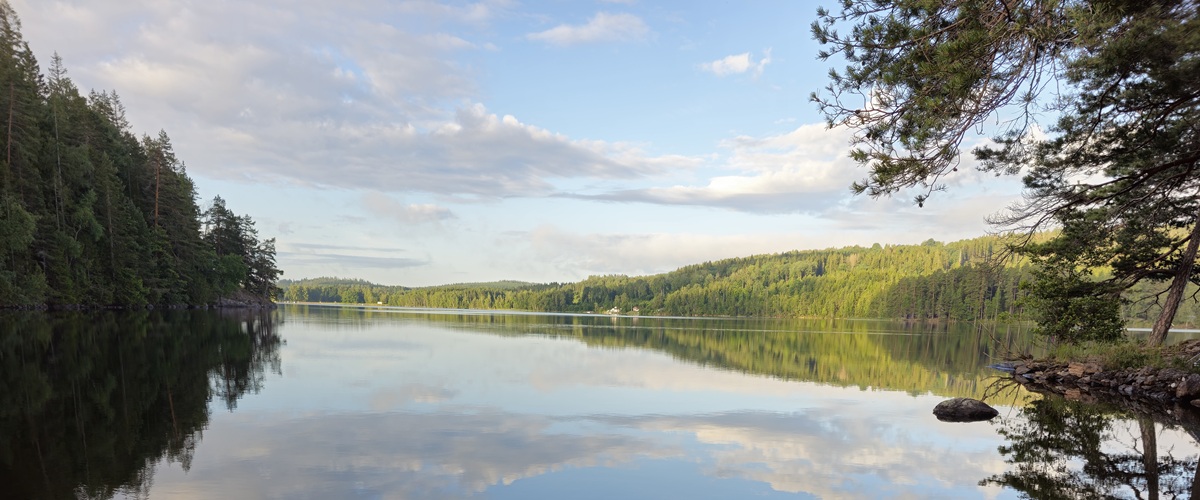
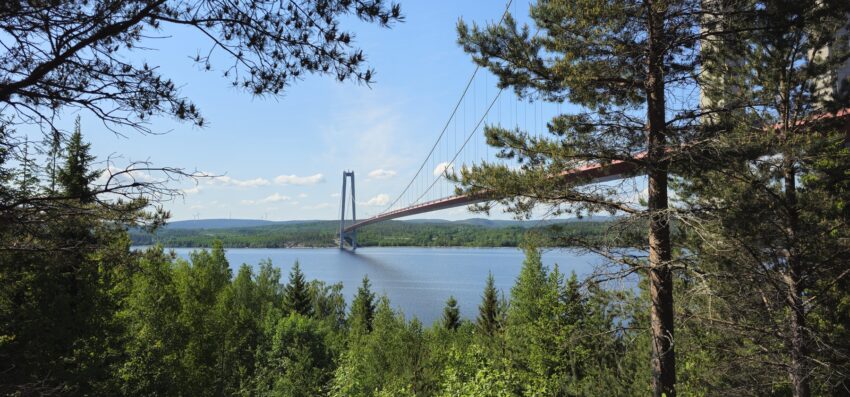
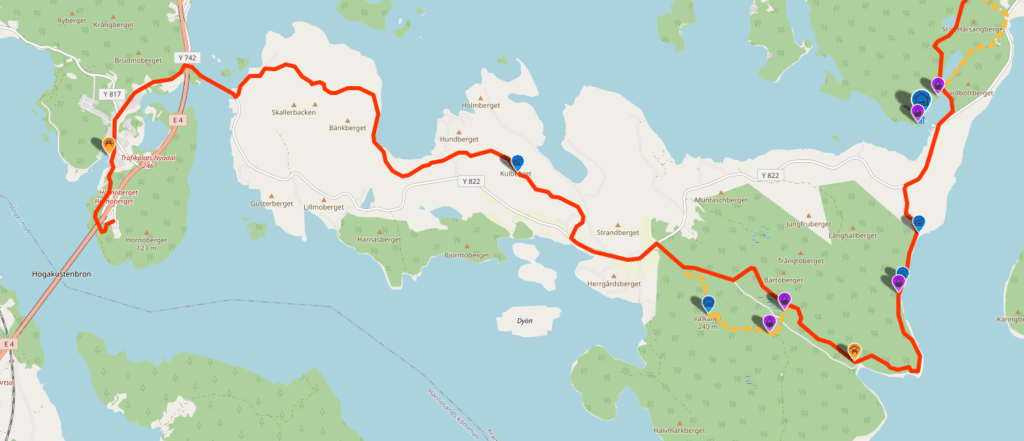
Day 1 – Höga Kusten Bridge to Fjäderbotten Södra
Distance: 20 km
Trail sections: Stage 1 – Stage 2
The journey begins early in the morning as we catch the first train from Stockholm to Härnösand. From Härnösand, we decide to take a taxi out to the starting point to make the most of the day — there’s a local bus that runs to the Höga Kusten Bridge if you want to save a bit of money, but in our case that would mean waiting over an hour. For us, starting early feels worth the price.
The trail begins near the Höga Kusten Hotel and follows a small forest road before winding down into the woods. Before long, the path opens up to a network of trails that carry us from hill to hill, with stunning views over the shimmering coastal waters.
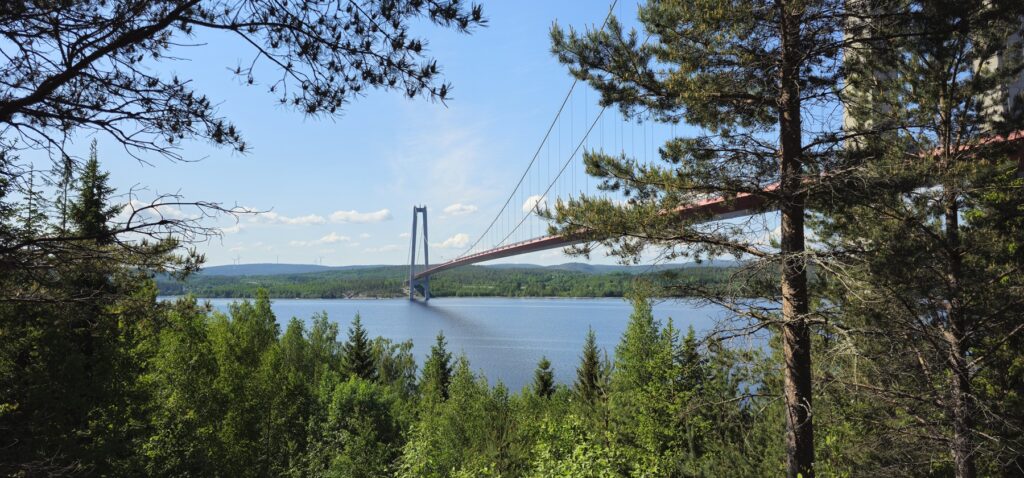
When we reach Valkallen, I highly recommend taking the short side trail up to the summit. The effort is well rewarded with a breathtaking panorama of the coastline and forests stretching endlessly in every direction. Up here, the silence feels immense — just the wind and distant call of seabirds.
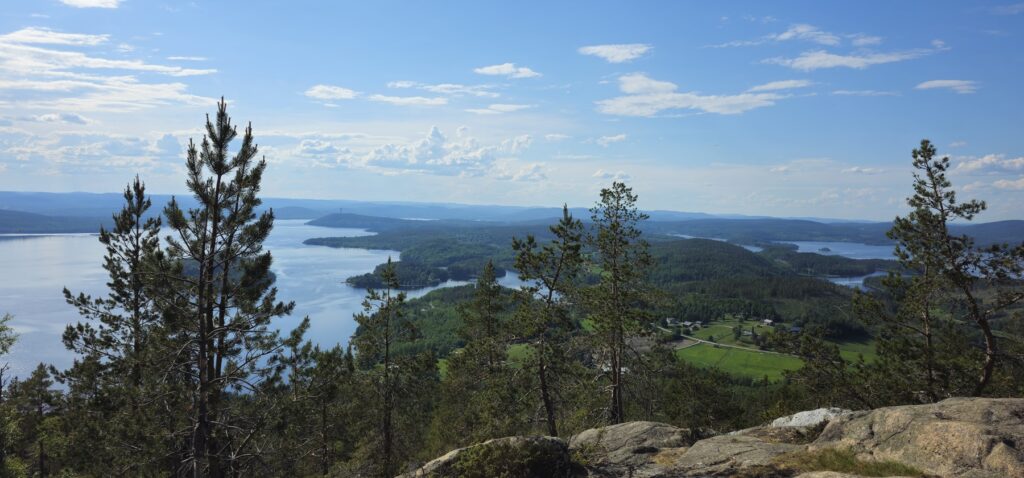
At the top, I meet another hiker who decided to spend the night at the cabin since the Höga Kusten Hotel was fully booked. On such a beautiful evening, it seems like the perfect alternative. The cabin even has charging outlets, which is a small but welcome modern comfort after a long day on the trail.
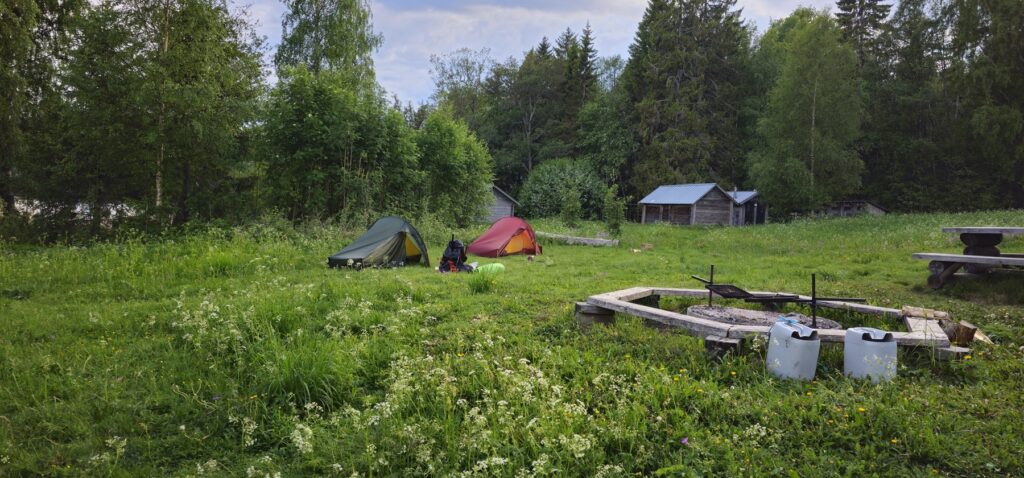
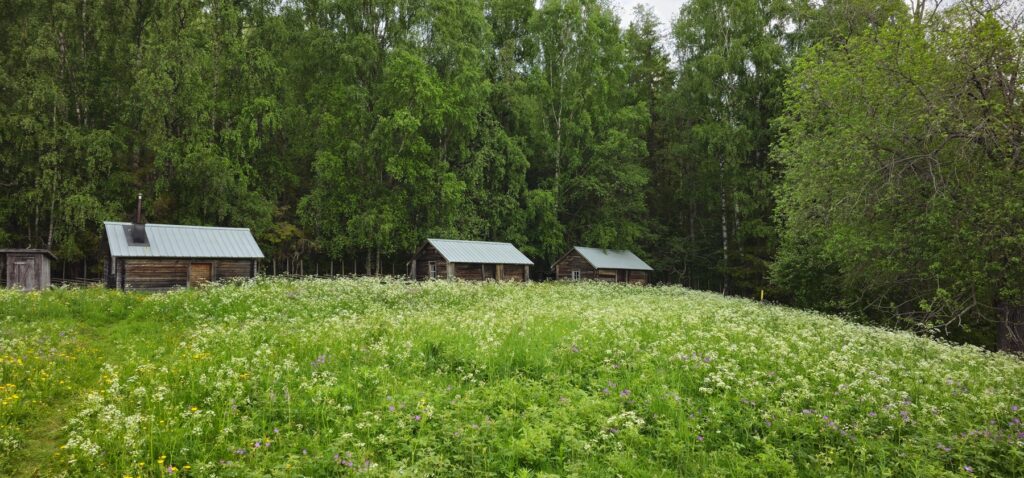
From Valkallen, we continue descending through the forest toward our stop for the night — Fjäderbotten Södra. The landscape opens into meadows with a few cabins scattered around, and although the mosquitoes are a bit more persistent than I’d like, it’s a peaceful place to rest. As the evening light fades, the forest turns golden and calm, and the simple joy of a first night outdoors settles in.
Day 2 – Fjäderbotten Södra to Erikskojan
Distance: 32 km
Trail Sections: Stage 2 – Stage 4
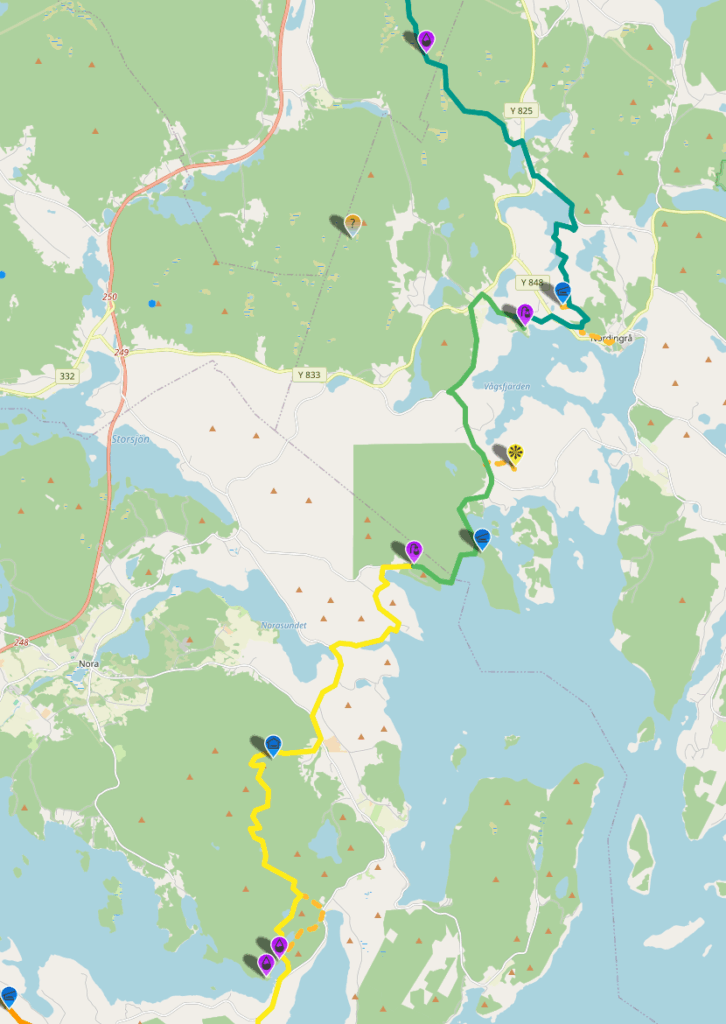
We wake to the soft sound of wind brushing through the trees. It’s one of those mornings when everything feels fresh and quiet — exactly the kind of start that makes you fall in love with hiking all over again.
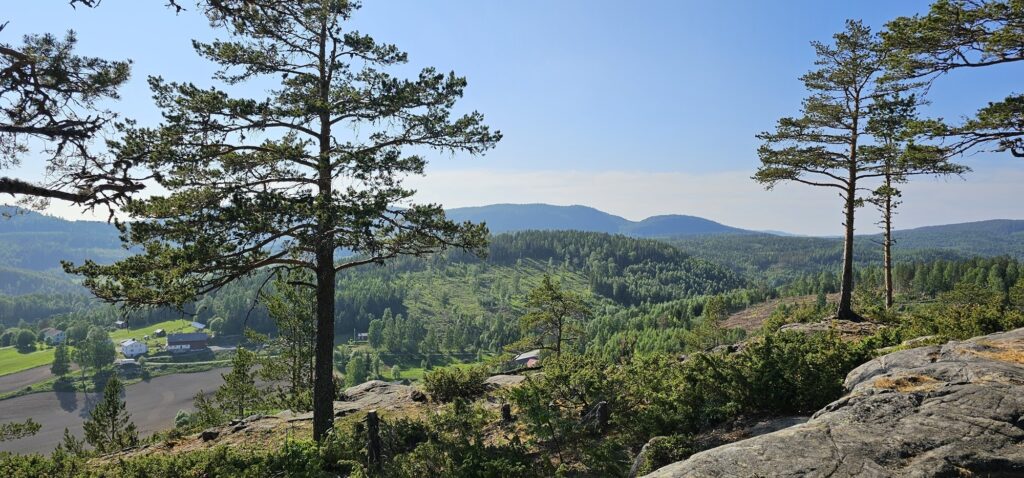
Today is one of the longer stretches of the trip, leading us deep through the forested parts of the Höga Kusten trail. Much of the day’s hike winds between tall pine trees and moss-covered paths that seem to go on forever. The air is cool, and the ground still damp with morning dew. It’s both peaceful and humbling to be surrounded by so much natural wilderness.
Along this section, water becomes an important consideration. The coastline’s water isn’t drinkable, so hikers rely on mountain streams and springs. Fortunately, there are plenty of water sources along the way — small trickles across the path, clear creeks, and natural springs where you can replenish your supply. I always carry a few bottles and a hydration pouch, but my Lifestraw filter has been a reliable companion on this trip. It’s a simple thing that makes such a difference — being able to safely refill on the go without worrying.
The trail occasionally opens up to small clearings where we stop for short breaks, enjoying a quick snack or just taking in the silence. Sometimes hours pass without meeting another person, which is part of what makes this stretch so special — there’s a feeling of true solitude and connection to the landscape.
By evening, after nearly 32 kilometers, we finally reach Erikskojan. The small cabin is surrounded by forest, with just enough space around it to pitch a couple of tents. It’s an ideal spot to end the day: peaceful, slightly remote, and blessed with a spring nearby for fresh water. As the sun dips low behind the trees, we sit quietly, watching the light fade into a deep northern dusk.
The forest hums softly with life — insects, distant bird calls, and the faint rustle of leaves. It’s been a long day, but utterly rewarding. Tomorrow promises more adventures.
Day 3 – Erikskojan to Skuleberget / Berras Lägda
Distance: 22 km
Trail Sections: Stage 4 – Stage 5
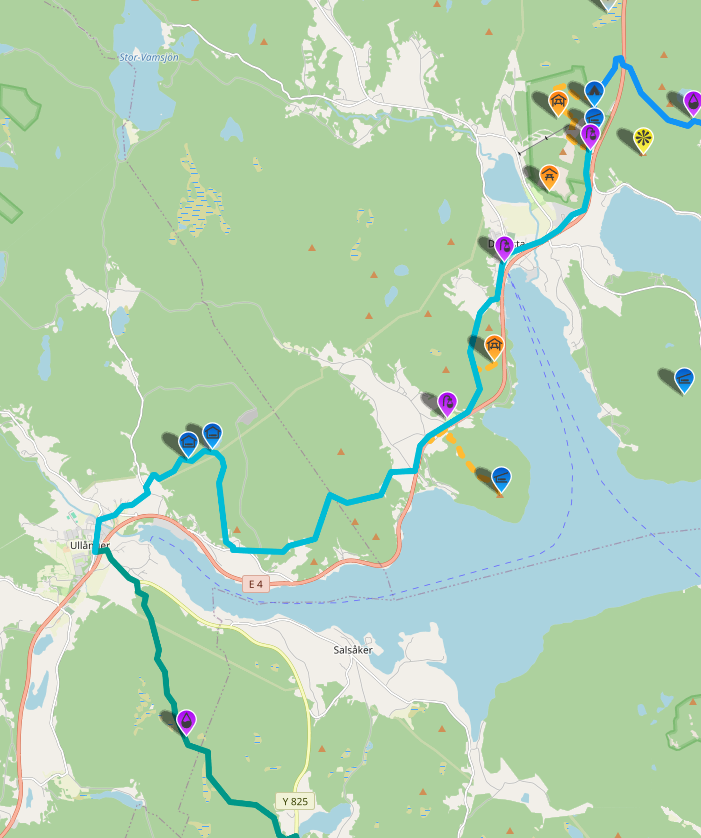
Morning arrives quietly at Erikskojan. The forest is veiled in a soft, silvery light and the air is cool. We chose to camp here for a reason: there’s a natural water source nearby, and nothing beats the simplicity of starting the day with fresh, cold water straight from nature.
Today’s goal is Skuleberget, one of the true icons of the Höga Kusten trail. The miles slip by as we move through a patchwork of dense forest, open hillsides, and quiet gravel roads.
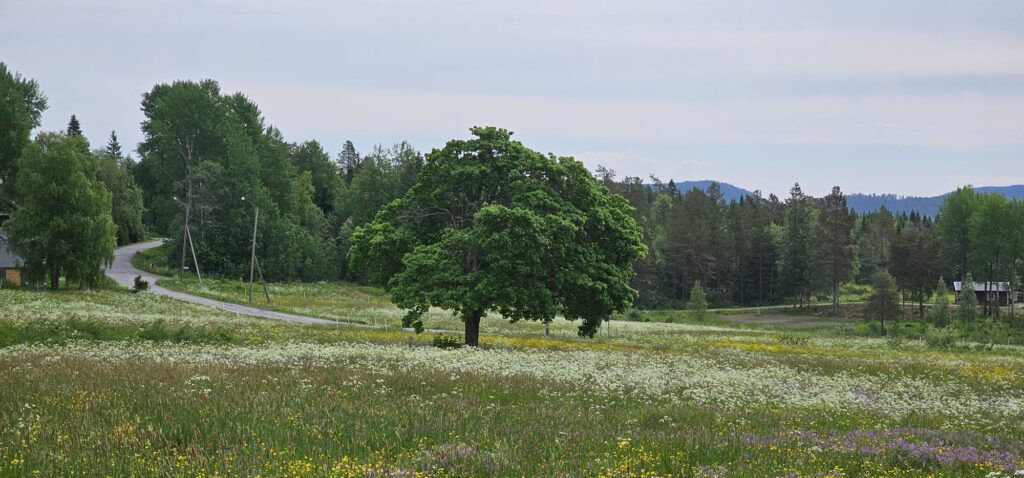
As we walk, we can’t help but think about how deserted everything feels. Hiking just before the main summer season has its charm — the solitude, the silence — but it also means that most cafés, campsites, and restaurants are still closed. We talk idly about how nice it would be to find a place for a cold beer, but every bar is closed this time of the year and just open on weekends. Still, there’s something special about these quiet, off-season days when it feels like you have the whole trail to yourself.
Eventually, the familiar outline of Skuleberget comes into view — steep, bold, and commanding the landscape like a silent guardian. We had originally planned to hike up to the top, but reality sets in when we see the height of the mountain and realize the chairlift isn’t running yet. After more than twenty kilometers on foot, legs are tired and the thought of climbing all the way up loses its appeal.
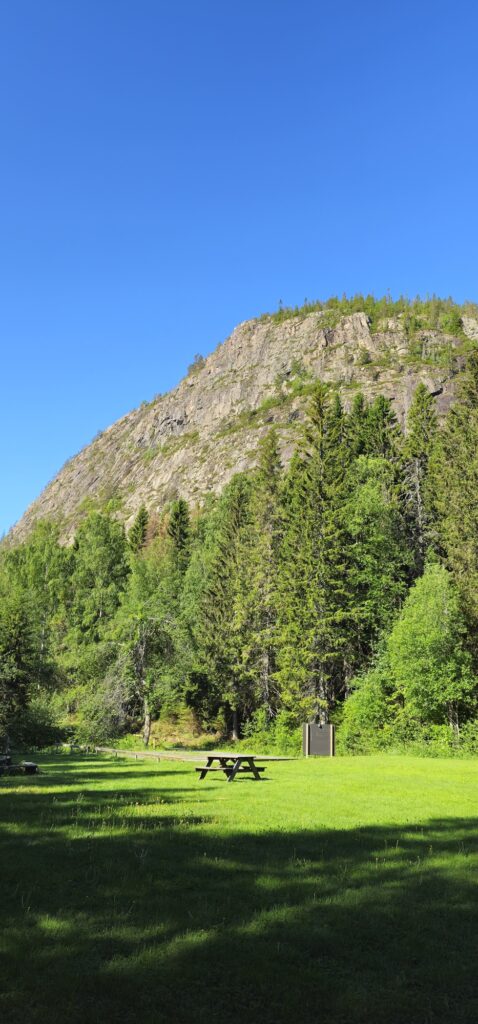
Instead, we make camp at Berras Lägda, a cozy little campsite near the base of Skuleberget. A quick Swish payment later, and our tents are up. From the campsite, we have a perfect view of the mountain — watching tiny figures of climbers scaling the rock face in the evening light. The whole scene feels like a postcard from Sweden’s wild heart: rugged cliffs, endless sky, and the faint scent of campfire drifting through the air.
As darkness slowly settles, we sit outside our tents, sipping from our bottles and letting the day sink in. The sky turns pale lavender and gold, and somewhere far away, we can hear the waves from the coast. Another day done — tired feet, happy minds, and a growing love for the rhythm of trail life.
Day 4 – Skuleberget to Skuleskogen / Tärnättholmarna
Distance: 19 km
Trail Section: Stage 5
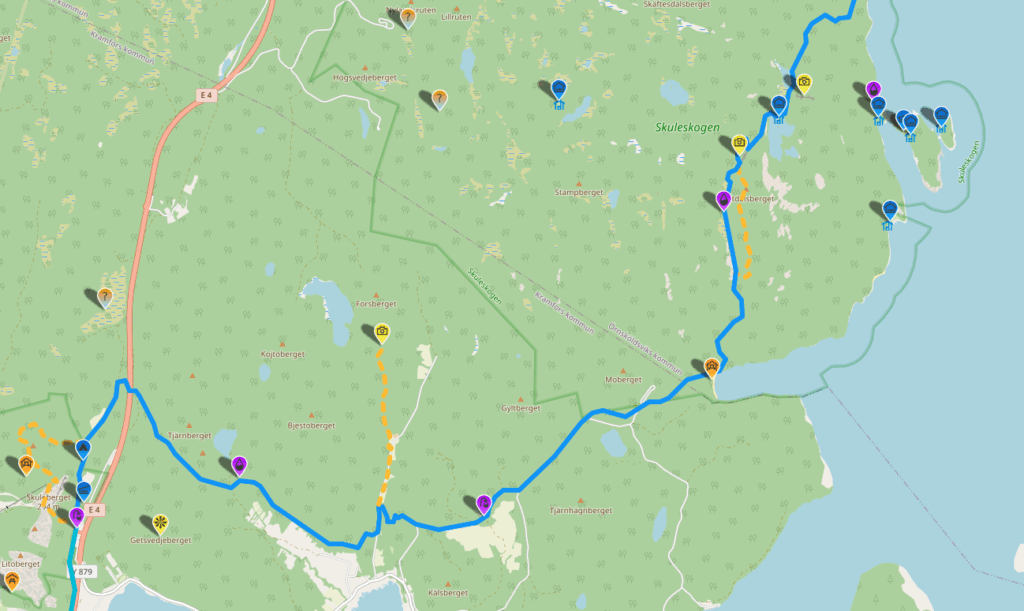
The morning at Skuleberget greets us with bright sunshine. It’s one of those perfect hiking mornings. Before setting off, we refill our bottles at the rest area near Skuleberget, which conveniently has a water tap and spots for camper vans. It’s always a good feeling starting the day with full bottles and light spirits.
The trail quickly leads us back into nature — soft forest paths winding through birch and spruce, streams glinting in the dappled light. Before long, we take our first detour of the day toward Dalsjöfallet, a small waterfall hidden just off the main trail. It’s not massive, but it’s beautiful in its simplicity — water cascading over smooth rock, framed by moss and ferns. I can imagine it roaring with strength during spring, but even now at the start of summer, it flows gracefully and serves as a peaceful rest stop. It’s also the perfect place to collect some fresh water and enjoy a snack break.
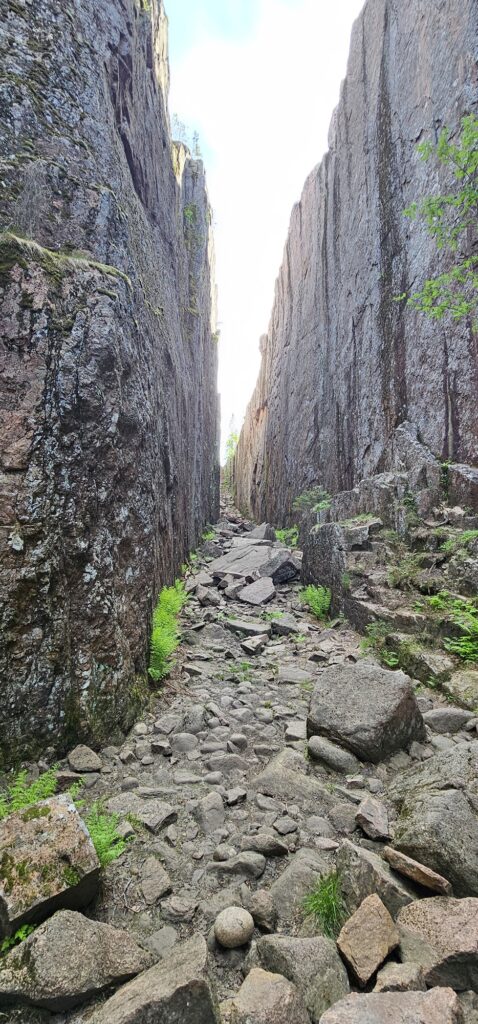
After Dalsjöfallet, the path continues steadily toward Skuleskogen National Park — one of the real highlights of the Höga Kusten trail. The shift in scenery is immediate and almost magical. The forest becomes denser, the rocks older and grander, and the air somehow feels cleaner. This is wilderness in its purest form, a place where the landscape tells the story of ancient land uplift and the raw power of nature.
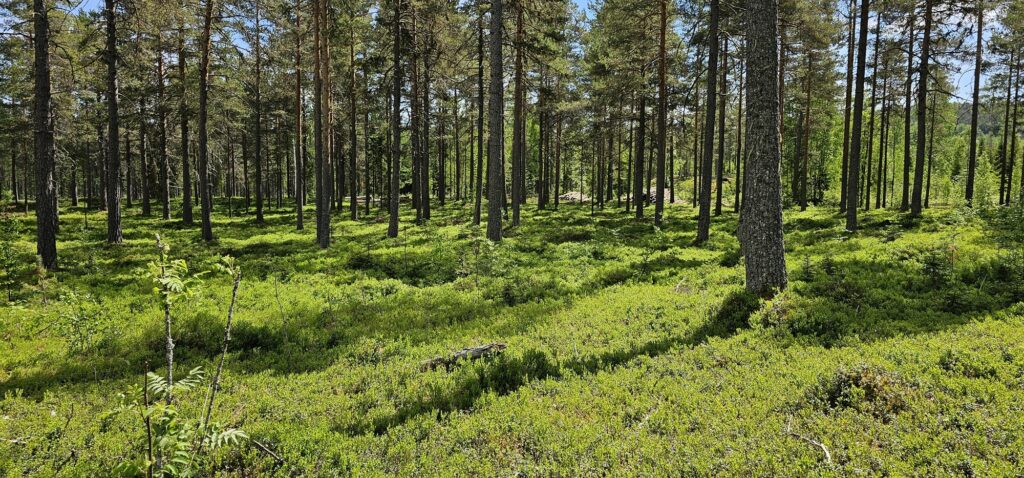
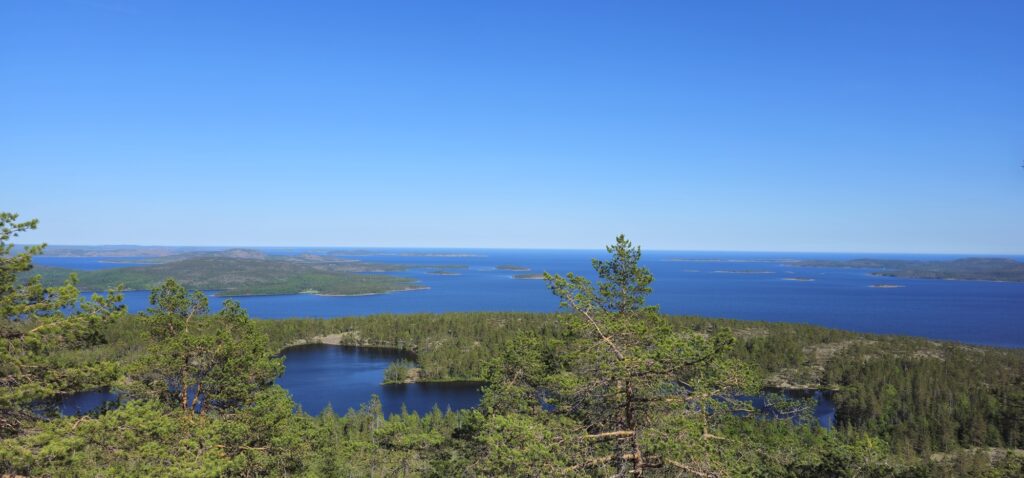
If you only have a few days to experience the Höga Kusten, I’d wholeheartedly recommend spending them here. Skuleskogen offers everything — dramatic cliffs, deep forest, coastal views, and a feeling of remoteness that’s hard to find elsewhere.
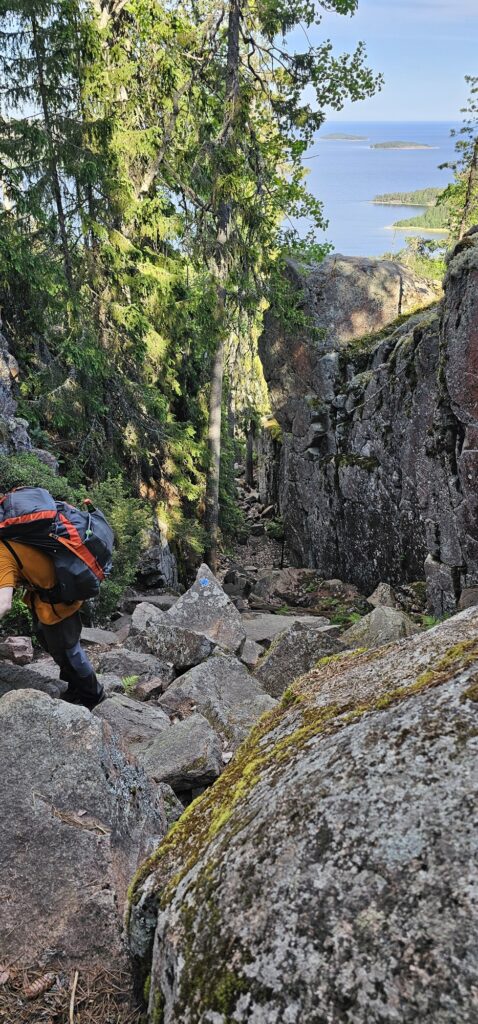
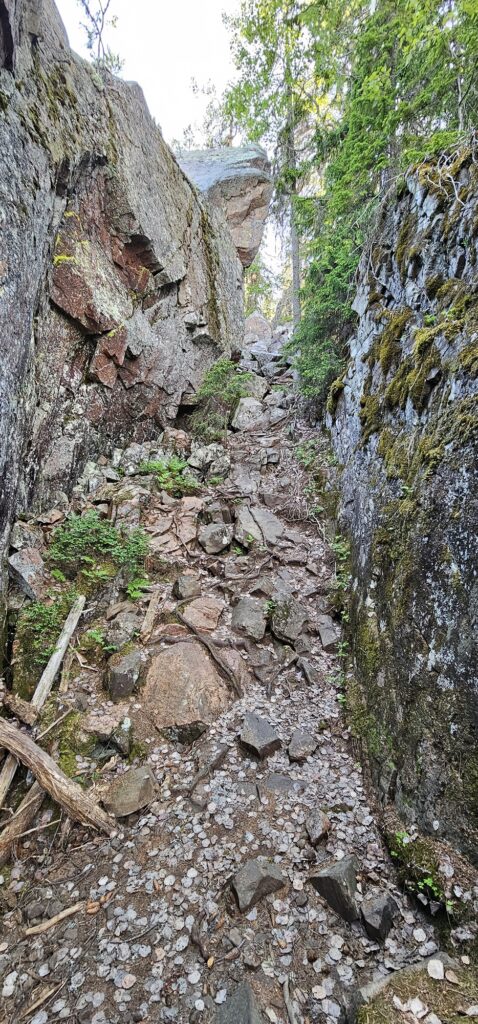
As the day draws to an end, we reach the area around Tärnättholmarna, where small islands and inlets create a stunning coastal mosaic. The evening light dances on the water, and the forest comes alive in shades of gold and green. There’s a quiet satisfaction in setting up camp here — a feeling that we’ve reached one of the most beautiful corners of the trail.
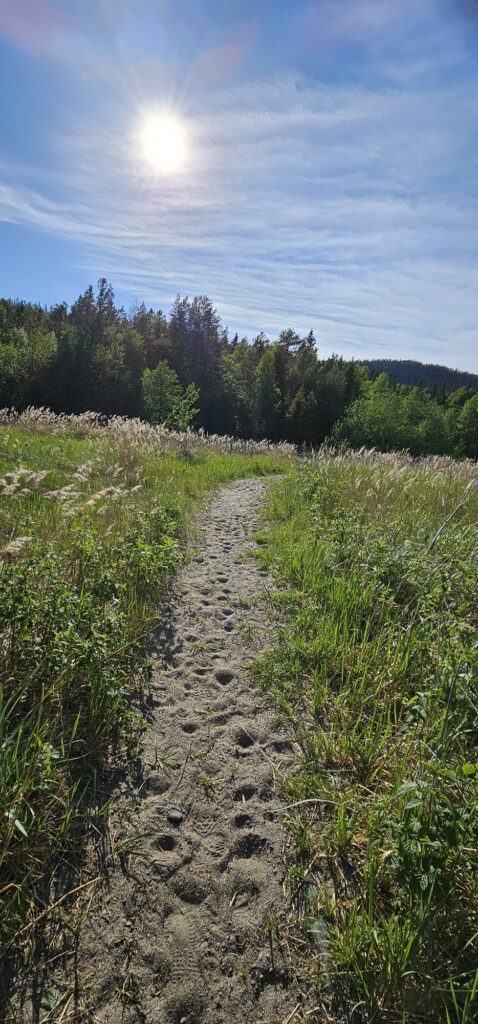
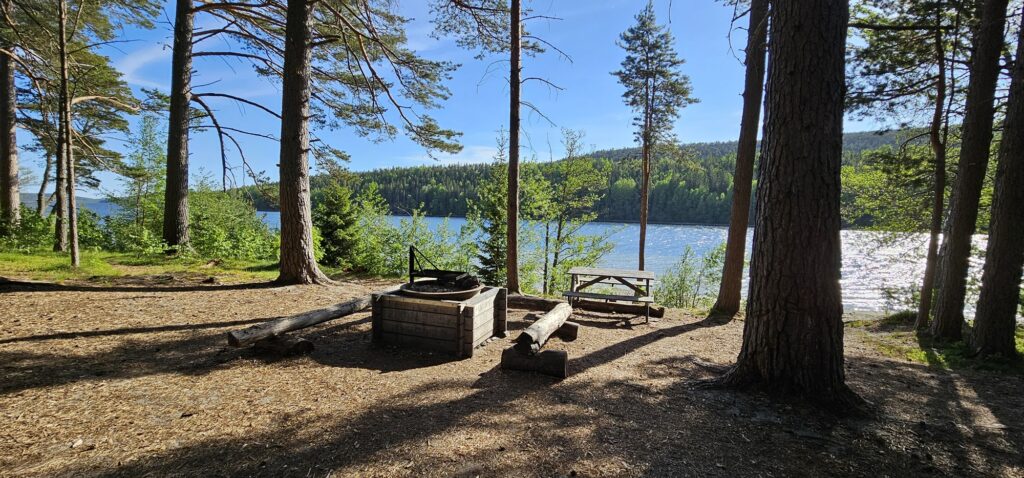
The sea whispers nearby as night falls, and the stars slowly appear, mirrored faintly in the calm water. After days of hiking through forest, it feels amazing to be so close to the coast again.
Day 5 – Skuleskogen to Sandlågan Windshelter
Distance: 22 km
Trail Section: Stage 6
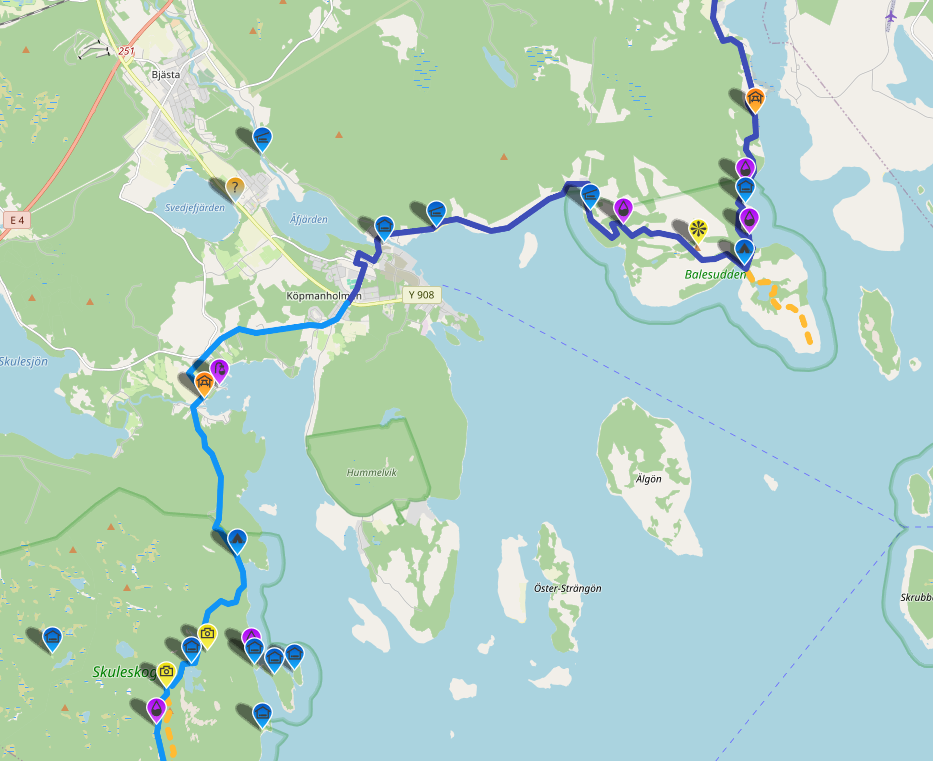
Morning in Skuleskogen feels timeless. The air is still, heavy with the scent of moss and pine, and soft beams of sunlight filter through the forest canopy. Packing up camp here takes a little longer — maybe because it’s hard to leave a spot this peaceful. There’s something about Skuleskogen that makes you slow down, breathe deeper, and just exist in the moment.
Once we’re on the move, the trail winds its way north through an ever-changing landscape — at times deep, quiet forest with soft paths padded by needles, then open ridges with sweeping views of the coast. The play of light and shadow follows us as the day unfolds.
Eventually, we reach Täcksklippen, a lovely little summit about 100 meters above the trail. It’s well worth the short climb — from the top, the view stretches out over hills, forests, and the glimmering patches of sea in the distance. Standing there, you get that perfect mix of accomplishment and serenity that makes long hikes so addictive.
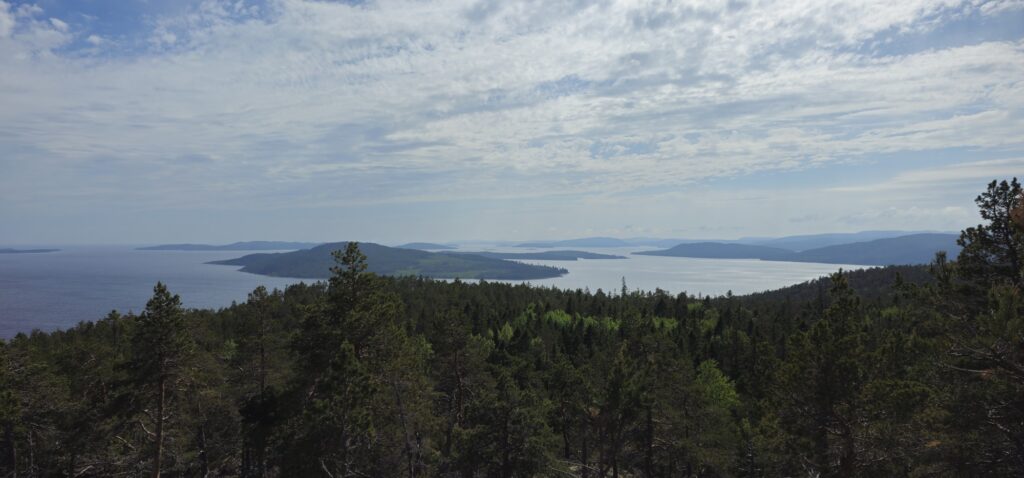
The plan was to camp near Boviken Cabin, but when we arrive, a few other hikers have already claimed the best spots. That’s life on the trail — sometimes you just have to adapt and keep walking. Fortunately, the path continues north toward Sandlågan Windshelter, where we eventually find our stop for the night.
There isn’t a lot of flat ground here, and space for tents is limited, but with a bit of exploring, we manage to find two perfect pitches tucked close to the trees. It’s a rustic and simple site, but that’s part of the charm. The nearby sea adds a soothing soundtrack, and the wind rustles softly through the branches.
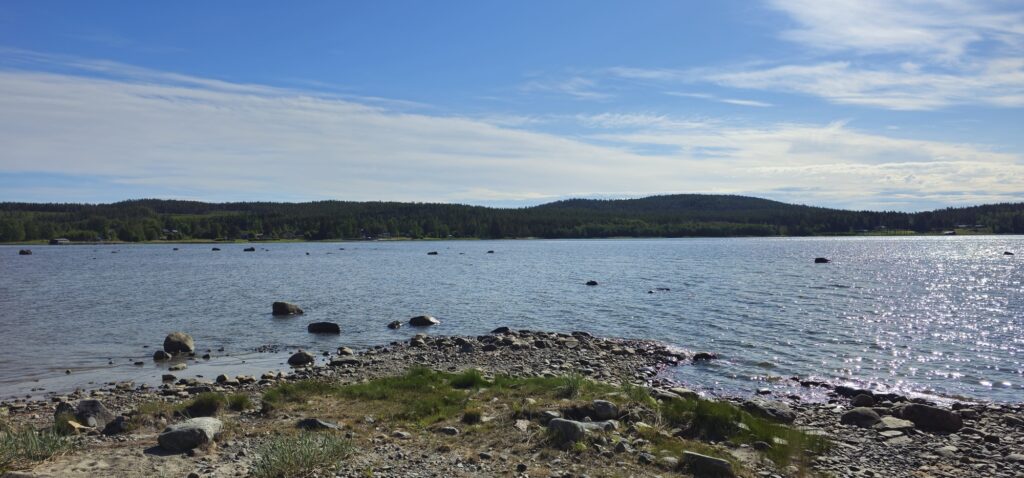
Dinner is simple but satisfying — a mix of dehydrated food, tea, and the quiet company of nature. As twilight settles, the horizon turns deep orange before fading into cool blues and purples. The forest hums with life, and we sit quietly, letting the sounds of the evening replace conversation.
Tomorrow will be our final stretch toward Örnsköldsvik. It’s strange how quickly trail life starts to feel normal — how walking, eating, and sleeping outside becomes the rhythm of the day. The thought of returning to trains, cities, and schedules already feels distant.
Day 6 – Sandlågan Windshelter to Örnsköldsvik
Distance: 18 km
Trail Sections: Stage 6 – Stage 7
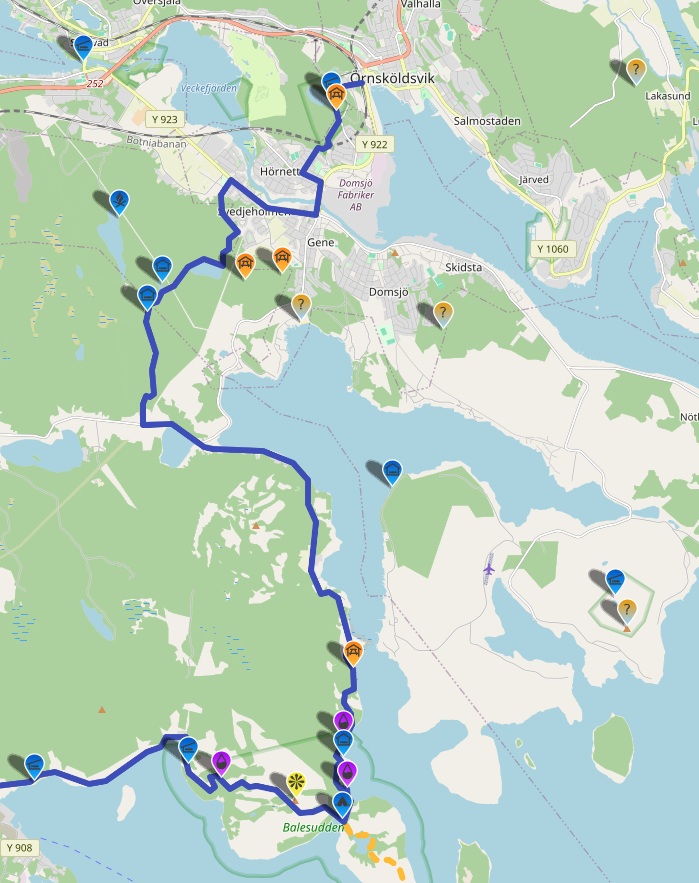
Our last morning on the Höga Kusten trail begins quietly. The air is cool and a gentle breeze comes in from the sea. Packing up camp feels bittersweet — part of me eager to finish strong, part of me wishing the trail would just keep stretching on forever. There’s a unique rhythm to days out here, one that’s hard to replicate once you return to everyday life.
The path toward Örnsköldsvik is relatively gentle, winding through stretches of forest and small clearings before gradually descending toward civilization. After so many days immersed in nature, the sight of roads, houses, and the first hints of the town feels almost surreal.
We move at an easy pace, taking our time on this final stretch. The air carries a faint scent of salt and pine, and as the sun climbs higher, the trail feels almost like it’s leading us back through all the moments of the week — the bridge at the start, the forests, the hills, the waterfalls, and the countless quiet places we passed.
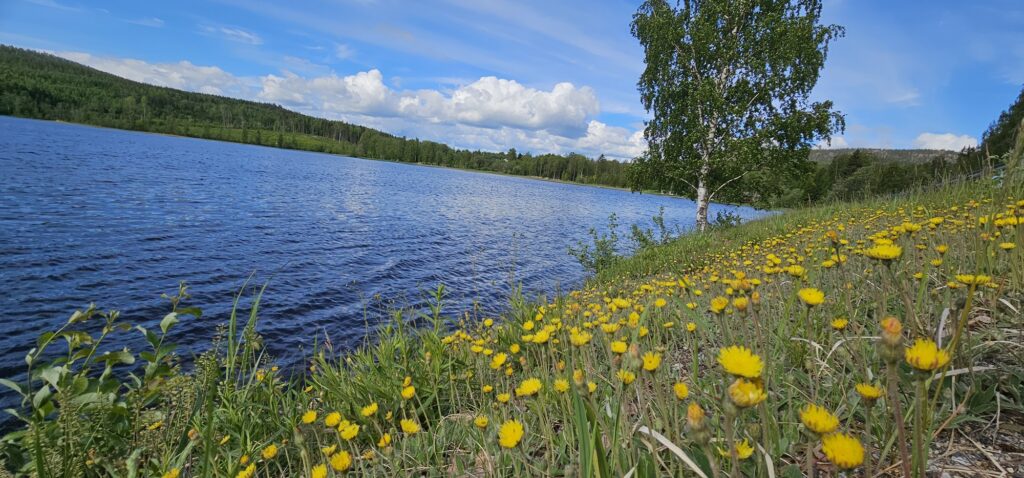
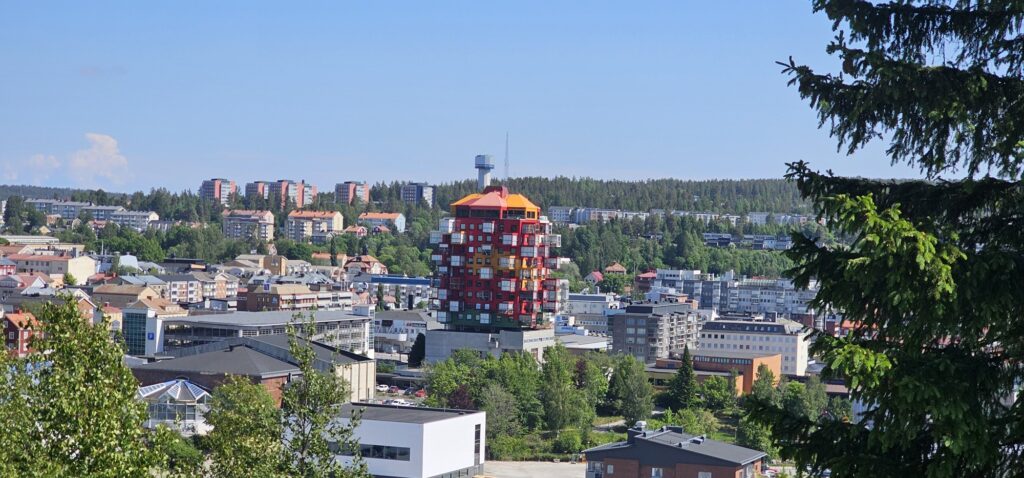
By midday, we reach Örnsköldsvik. The first thing we do? Stop by the train station café for something cold to drink — there’s nothing like a soda or coffee after a week of trail water. It’s a small but strangely satisfying luxury. Before long, we’re on the train heading back toward Stockholm, staring out the window as the northern forests roll by.
It’s hard not to feel a sense of quiet pride. The Höga Kusten trail has a way of grounding you — not just for its rugged beauty, but for the calm and focus it brings. Over six days, we’ve hiked from the grand span of the Höga Kusten bridge all the way north to Örnsköldsvik, crossing waterfalls, forests, cliffs, and coastline.
The full trail can easily be done in five days if you push a bit longer on some stages, but taking six days gives space to breathe, explore side trails, and enjoy the evenings without rush. In the end, it’s not just about covering the distance — it’s about experiencing the tranquility, the rhythm of walking, and the quiet connection to the landscape.
As the train speeds south, I can still see the colors of the coast in my mind — deep greens, calm blues, and that endless northern light. The Höga Kusten might be rugged, but it leaves you with a deep sense of peace. And like all great hikes, it ends not with exhaustion, but with gratitude.